
Name: Sol
Type: Senegal
Family: Africans
Sol's character: Shy
She really likes to be whistled at. Prefers men


Responsible Puppy Rearing
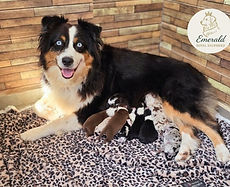
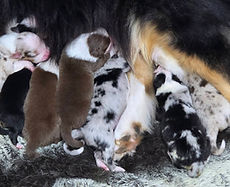
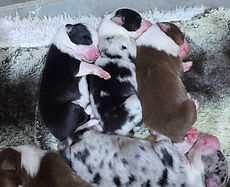
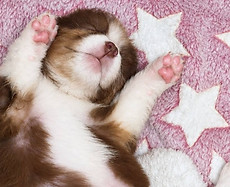
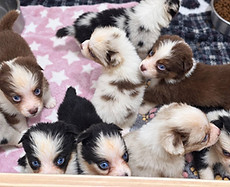
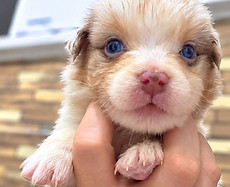
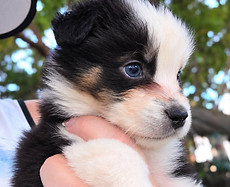
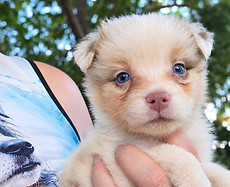
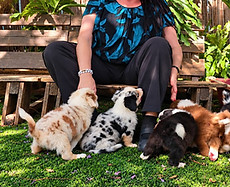
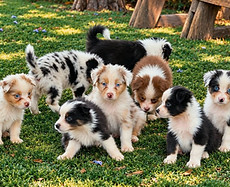
Being a responsible breeder is about so much more than having a litter of puppies.
From the outside, people see a beautiful picture of a row of tiny, fluffy, perfect puppies. They see photos of a new litter, pink noses, tiny paws, and eyes opening for the very first time.
But behind that picture is an entire world that almost no one sees or knows about.
Being a responsible breeder of registered dogs is not simply about “putting a male and a female together” and waiting for puppies. It is a responsibility that begins long before breeding, continues through every moment of the pregnancy and birth, and does not end when the puppy leaves for its new home.
It starts long before the puppies are born
Responsible breeding begins with choosing the right parents.
You do not choose a dog simply because it is beautiful, and you do not breed a female simply because she is purebred. You study bloodlines, examine pedigrees, understand the strengths and weaknesses of each dog, and try to create a combination that will preserve and improve the breed.
You look at health, genetic conditions relevant to the breed, structure, temperament, and conformity to the breed standard.
A responsible breeder understands that every decision made today can affect generations of dogs in the future.
A pedigree certificate is not “just a piece of paper.”
Behind it is a history of generations. It allows us to know where a dog comes from, follow bloodlines, and make more informed breeding decisions.
The pedigree papers given to the puppies also indicate that the breeder has followed the regulations of the kennel organization; that the mother is not being exploited as a puppy-mill dog; that there is oversight regarding how often and when dogs are bred; and that the parents have undergone the required health examinations and received breeding approval.
Most importantly, it shows that the breeder cares and is not looking for shortcuts.
The goal is not to produce as many puppies as possible.
The goal is to raise the next generation in the healthiest, most responsible, and thoughtful way possible.
And then comes the responsibility toward the mother
Before there are puppies, there is a mother.
And she should always come first.
Pregnancy and birth are complex processes for a female dog, and the breeder’s responsibility is to care for her, monitor her closely, provide appropriate and nutritious food, arrange veterinary care when needed, create a safe and quiet environment for giving birth, and above all, be there for her.
Most births go smoothly.
But sometimes they don’t.
A responsible breeder needs to know how to recognize when something is not right, when it is appropriate to continue monitoring, and when it is time to contact a veterinarian.
And the responsibility does not end when the last puppy is born.
The mother must continue to be monitored: that she is eating, drinking, recovering, nursing, feeling well, and showing no signs that require medical attention.
Because before our desire for beautiful and healthy puppies, we have a responsibility to the mother who brought them into the world.
Labor can take many long hours.
And yes, I will sit beside her for as long as necessary, helping her and the puppies as they are born.
The nights no one sees
And then life begins with newborn puppies.
These are the nights when the clock almost stops mattering.
You wake up again and again to make sure everyone is breathing, everyone is warm, everyone is nursing, and no tiny puppy is being left behind.
You weigh them and monitor their weight gain.
You check who is strong and who is struggling.
You make sure the temperature around the puppies is appropriate, because during the first days of their lives they are highly dependent on their mother and their environment to maintain their body temperature.
And sometimes there is a tiny puppy who simply cannot compete with its siblings.
So you help.
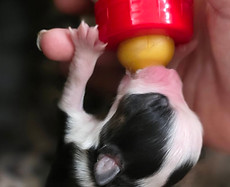
You make sure the puppy latches onto its mother, give it individual nursing time so it can feed peacefully, monitor it closely, and when necessary, supplement its feeding with a bottle and appropriate puppy milk formula.
Suddenly, your entire routine is measured by the time of the next feeding.
Even if it is three in the morning.
Even if you have slept for only an hour.
Even if you have to call work and say that you cannot come in.
Because for that tiny puppy, there is no such thing as “I’m tired.”
Its survival depends on you.
A breeder can invest everything they have and do everything right, and nature still does not always cooperate.
There are moments of worry. There are weak puppies. There are complicated births. There are emergency trips to the veterinarian. There are nights when you sit beside the whelping box and struggle to close your eyes because something simply does not feel right.
And when you are truly a breeder, every puppy matters to you.
They are not just a number in a litter.
You know each one from the very beginning. You know who was born first, who always finds the best nipple, who was the tiny one that needed a little extra help, and who made you get up again and again in the middle of the night just to make sure they were okay.
Raising puppies is not just about keeping them alive.
As they grow, the responsibility changes.
Now you have to prepare them for life.
They need to be introduced to people, sounds, different surfaces, handling, environments, and new experiences gradually and positively.
There is endless cleaning, feeding, monitoring their development, providing age-appropriate care, and learning the individual personality of each puppy.
Because the goal is not simply to hand over a healthy puppy.
The goal is to send into the world a puppy that has been given the best possible start we could provide — and to place that puppy with the family that is the right fit for both the puppy and the family.
And that also means understanding that not every puppy is right for every family.
A responsible breeder does not only ask, “Who wants to buy a puppy?”
They ask, “Which home is right for this particular puppy?”
A highly energetic puppy may be a great fit for one family, while a calmer puppy may be better suited to another.
Some puppies may be well suited for dog sports, others for the show ring, while others will primarily become wonderful family companions. Some may even go into therapy-dog work.
Our responsibility is to know them well enough to try to create the right match.
And what happens on the day they leave?
You waited for this litter.
You planned for it.
You cared for the mother.
You watched every puppy enter the world.
You fed them, cleaned, weighed them, photographed them, worried about them, and stayed awake through the nights.
You watched them transform from tiny puppies completely dependent on their mother and on you into curious, playful little dogs, ready to discover the world.
And then a family arrives, picks up the puppy, and drives home with them...
And you are happy for the puppy and for the family.
But the responsibility does not end at the moment of handover.
In my eyes, this is one of the biggest differences between someone who simply produces puppies and a true breeder.
A true breeder remains a breeder even after the puppy has left.
They want to receive photos.
They want to know how the puppy is growing.
They are there for questions, advice, and guidance throughout the journey.
They want to know about any health issues that may arise in the future, because this information is also important for the future of the breeding program.
And above all, they feel responsible for the dogs they brought into this world.
Not for eight weeks — but for life.
So why do puppies from a responsible breeder cost more?
Because the cost of a puppy does not begin on the day it is born.
Behind that puppy are years of work, learning, and experience; health and genetic testing; shows and evaluations; careful bloodline selection; registration and documentation; veterinary care; quality equipment and nutrition; ongoing monitoring; and sometimes travel, importing new bloodlines, and a tremendous investment that has nothing to do with the number of puppies eventually born.
There are a lot of expenses.
And above all, there is something that cannot be given a price:
Time.
The hours spent beside the whelping box.
The alarm going off in the middle of the night.
The bottle being prepared while everyone else is asleep.
The hand holding a tiny puppy, waiting to see its weight finally begin to increase.
The concern for the mother.
The laundry.
The cleaning.
The exhaustion.
And the love.
Being a breeder means taking responsibility for lives that have not yet been born
That may be the most accurate way to describe responsible breeding.
We are the ones who decide that this litter will come into existence.
And therefore, from the moment we make the decision to bring these puppies into the world, we owe them the very best that we are capable of giving.
Not every litter will be perfect.
Our responsibility must remain the same — toward the breed, toward the mother, toward every puppy that is born, and toward the families who will welcome them into their lives.
Because a responsible breeder does not breed for numbers.
They breed for generations.
And behind every registered puppy raised responsibly, there is much more than a pedigree certificate.
There is knowledge.
There is planning.
There are sacrifices.
There are sleepless nights.
There is fear, excitement, worry, and an enormous amount of work that no one on the outside sees.
And there is one small promise we make to every puppy the moment they enter this world:
You were born here, under my care, and therefore I will do everything I can to give you the best possible start in life.